
The art of keeping things together. Eight systems that streamline everyday living.
There’s a huge shift that happens when you go from being “young” to being, well… an adult. Not the legal adult who turns eighteen and is technically allowed to vote. I mean the version of adulthood where no one is double-checking that you renewed your car registration (I actually fully missed renewing it in 2024 and had to pay a $1,000 fine), or reminding you about that dermatologist appointment you swore you’d get around to. The version where everything, and I mean everything, becomes yours to manage.
For a while, I thought I was handling it fine. I was working, socializing, trying to keep up with my routines, and doing all the things I thought adults were supposed to do. But after many sleepless nights and the beginning of a debilitating anxiety spell, I realized I was living in a constant game of “catch up.”
Eventually, I reached a point where I could not keep going the way I was. The panic of always being behind was exhausting and the mental clutter was unbearable. However, my life changed when I realized that I was to blame for participating in the chaos, and I had the power to change it, so I did.
People who know me now probably assume I’ve always been Type A with a color-coded calendar and organized apartment, when in reality, this version of me was built out of the very real desire to stop feeling like life was happening faster than I could keep up with it.
And out of that desire came the systems, the routines, and the habits I now rely on daily.
What surprised me most wasn’t how many habits I needed, but how few. Just a handful, repeated consistently, completely shifted the way I moved through my days. Each one solved a tiny issue that once caused overwhelming stress, and together they built a kind of calm I didn’t realize existed.
/ /
The Monthly Reset
My Monthly Reset started during a season where I was so busy that every month felt like a continuation of the one before it. I wasn’t being present, and I craved the intentionality that comes with romanticizing your life.
My solution to that was creating some kind of mental marker that tells my brain, “Ding ding ding! It’s a new month.” So I grabbed my laptop, changed my wallpaper, cleaned my space — it was my way of giving myself a fresh start, both physically and digitally. And slowly, it stuck and became a part of my routine.
What I do during my resets differs each month, but for the most part, my to-do list consists of:
– Freshen up our home
– Reset my digital space (change wallpapers, update Pinterest boards, clear inboxes, delete duplicate photos, back up files to hard drive)
– Update my reading and watch list
– Wash all of my laundry
– Reflect on the previous month and set intentions for the following month (this one is so important)
In the end, it’s less about the actual tasks and more about giving myself a moment to reset.
The Weekly Operations Meetings
The Monthly Reset worked so well that I eventually also added a smaller, weekly version to keep things running smoothly. It happens on Sundays, and the most important piece of it is what I call my Weekly Operations Meeting.
The name sounds a lot more official than it is. In reality, it’s just fifteen minutes where I sit with my calendar and look at the week ahead. I write down everything that is non-negotiable: appointments, meetings, due dates, dinners I have planned, workouts I want to fit in. Seeing it all in one place keeps me from spiraling into the “why do I feel so overwhelmed” mindset later in the week.
I also use this moment to make small adjustments in my schedule (as recommended by my boyfriend after experiencing way too many mid-week panic attacks lol). If I notice a day looks overloaded, I move something to a different day. If a work task is unrealistic with the amount of time I have scheduled for it, I reach out to my manager and reschedule it before it becomes a problem.
Sometimes I end this little “meeting” by scheduling groceries, or planning my outfits for the week, or any little thing that might help ease the stress for the week ahead.
Color Coding
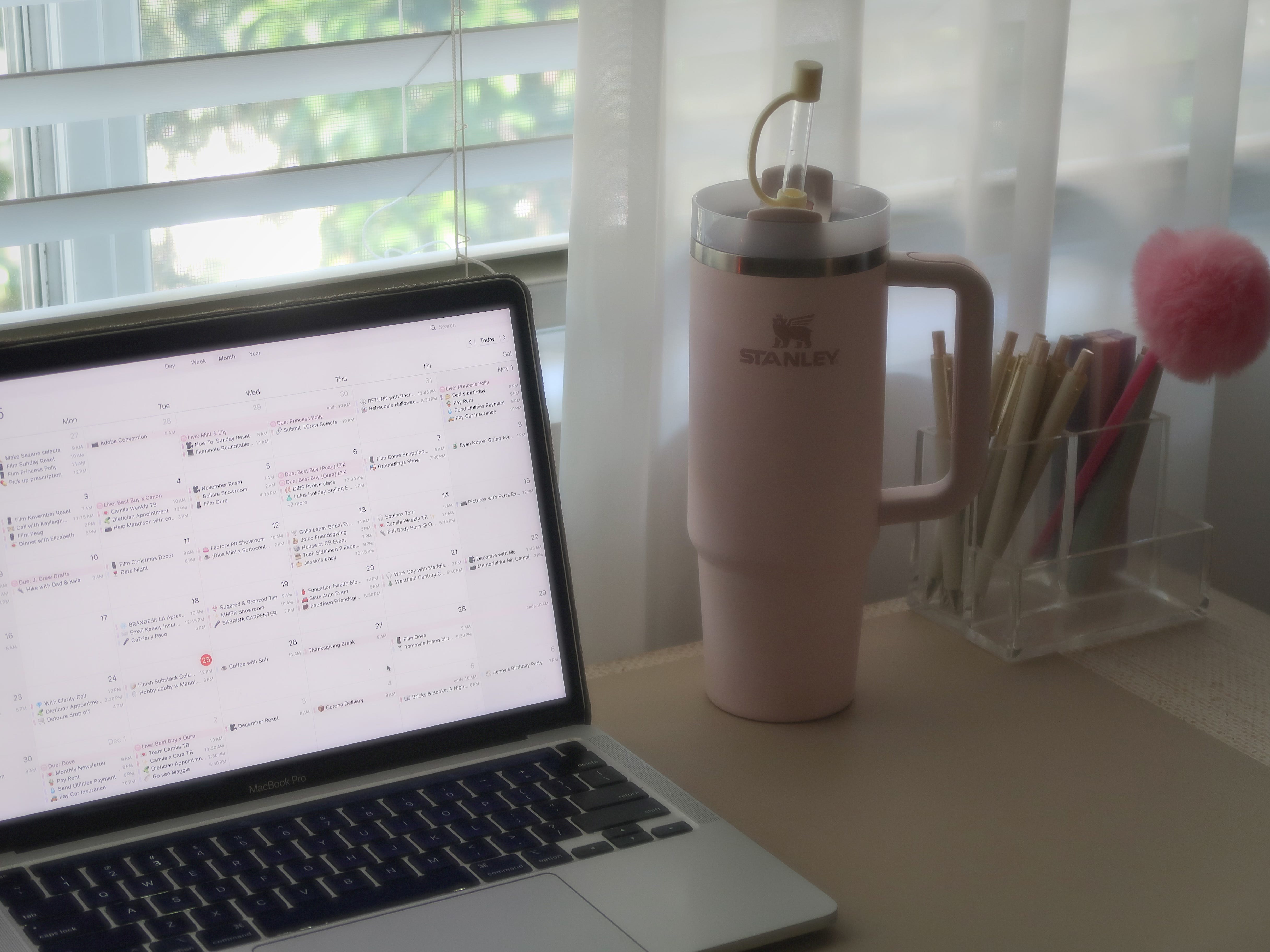
Once I got into the rhythm of doing my Weekly Operations Meeting, the next thing that made a huge difference was color coding my calendar. And I know, it sounds like something only the most Type A girlies do, but it was relatively low lift and has genuinely changed my life.
Not only does it make my calendar cute to look at (I also started adding emojis after watching this YouTube video), but it gives you a visual map of your week, and acts as an immediate snapshot of balance, or the lack of it.
App Stack
While I mostly use my phone for a mix of work and mindless scrolling, I realized I could also be using it for wellness. So I put together a tiny toolkit of apps that keep everything running in the background, from my bills to my sleep patterns.
Rocket Money keeps my spending in check. It’s so nice to see all your transactions categorized and laid out weekly, monthly, quarterly, and yearly. You can create budgets which then prompts the app to send you a notification when you go over it in any given category, and it also keeps track of all those subscriptions you probably forgot you signed up for.
Oura tells me when my body is tired before I realize I am burnt out. It tracks my sleep quality, reminds me to stand up when I’ve been sitting too long, and will alert me if there are any signs of strain in my body. This way I can be one step ahead and hopefullyavoid getting sick.
Sleep Cycle lets you set a 30 minute wake up window and uses your sleep patterns to wake you up during a lighter stage of sleep.
Brick is the newest addition, and it keeps me from falling into a social media hole when I need to work. I can physically block myself from opening up Instagram and TikTok, and it immediately worked wonders on my insanely high screen time.
These apps run in the background like a little support system I can rely on every day.
2-Minute Rule
If something takes less than two minutes to complete, I do it right away. That could be anything from washing one dish, hanging up a jacket, logging in a work receipt instead of throwing it in my bag, or even sending a quick text. These tiny tasks used to pile up into overwhelming chaos and the two minute rule fully stopped that spiral. It keeps the mess from building so you can actually move on with your day.
And the best part is that it does not require motivation. It became a habit that I don’t even think twice about!
Clear Zones
There are three areas in my home that I keep clear at all times: my bedside table, my dinner table, and my coffee table, and I call them my Clear Zones. Cleaning my entire apartment every day is unrealistic, but keeping a few key surfaces tidy is actually doable. And when those areas are clean, my whole home feels put together.
This habit started when I noticed that clutter spreads. A disorganized bedside table somehow turns into stuff piling up on the dresser, then the floor, and before I know it, the room is a disaster. Or if the coffee table is chaotic, then the whole living room looks untidy. But when those areas are clean, the space resets itself without much effort.
Lesson of the day: you do not need to organize everything… you just need to organize enough.
The One Bag Rule

I like to keep one bag fully stocked at all times, and it sits by my entryway table ready for when I’m heading out. It’s nothing fancy, just my everyday bag, but it has everything I need already inside it: my wallet, keys, lip balm, claw clip, lotion, and an emergency snack. Read more about my bag essentials below.
When I want to switch bags, I bring the new one to my entryway and swap everything out right then and there. And when I get home, I put everything back in the everyday bag. It takes thirty seconds, but it keeps me from scrambling later.
Before this routine, I was constantly forgetting something. Sometimes it was lip balm, other times it was my wallet, and every time it created unnecessary stress. I would be halfway to an event and realize I was missing the one thing I actually needed.
But now I always know my things are where they should be, so I do not have to do the whole mental checklist routine. I just grab the bag and go.
The Clean Car Policy
I treat my car like my mobile office. I spend so much time in it that when it’s cluttered, so is my brain. Driving an hour in traffic in a car that’s filled with empty cuts, receipts, and jackets was annoying, but I didn’t realize how much it weighed on me until I finally started keeping it clean.
Now, I make an effort to bring everything into the house after I’m done with it. And if it takes two trips, so be it. The difference is unreal! So now, when I get in my car, I actually feel calm. When I run errands, I feel organized. When I pick someone up, I am not embarrassed and moving stuff around.
Your environment affects how you feel, and your car is no exception. A clean car is one of the most underestimated forms of self care there is and it always makes me feel like such a grown up.
/ /
Being known as the organized friend will always make me proud because I built that version of myself from scratch. I kept choosing these habits again and again until they became second nature, and not to get super cheesy, but they did kind of change my life.
I hope this inspires you to start building routines that make your life feel easier and more grounded. And if you’re feeling overwhelmed, remember that you do not need a big overhaul or a full system to begin! Focus on one habit that supports you, one small thing that makes tomorrow smoother than today. Start wherever you are, with whatever you have, and let it grow from there.
Structure is not about tightening your life. It’s about making space in it.